

Lessons Taught,
Lessons
Learnt :
Teacher and Learner Narratives
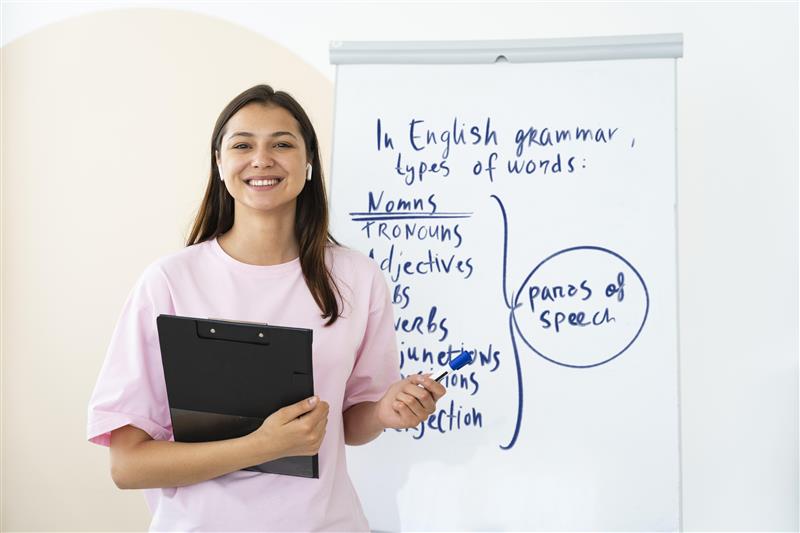
Domain-1: Teachers of English
Teachers are at the heart of every educational journey, shaping young minds and fostering intellectual curiosity. This domain explores evolving pedagogical practices, mentorship, and professional development in a rapidly changing educational landscape.
- From Gurukul to Google: The changing/emerging roles of teachers
- Focus on the Learner and the Learning Process
- Technology is no substitute for the teacher
- Empowering Educators: Fostering Collaboration and Action Research
- Beyond disciplines and Languages: Multidisciplinary and Multilingual Approaches to teaching English

Domain-2: Learners of English
The role of learners as active participants in knowledge creation is central to the educational process. This domain delves into learner engagement, motivation, learner needs across different levels of education.
- Learners: Differently Wired
- Assessing Learners’ progress: Beyond Scores
- Learner Strategies and Learning Styles
- Learning Spaces without Boundaries
- Learning to Read and Reading to Learn

Domain-3: Educational and Language Policies
Educational policies form the bases for curriculum design, teacher training, and student learning experiences. This domain examines the effectiveness of current policies, challenges in implementing them, and the need for reforms in language education.
- Current Policies and their Relevance
- The Global vs. Local Dilemma: Educational policy and language policies
- Integrating Tradition and Modernity: Revamping Educational Frameworks
- Building a Sustainable Future and Making Learners Future-Ready

Domain-4: Technology in Language Teaching and Learning
Technology has become an integral part of modern education, redefining the way knowledge is acquired, and languages are taught and learnt This domain focuses on the role of virtual learning, virtual and augmented realities, artificial intelligence, learning management systems, and digital storytelling in language and literature classrooms.
- Smart Classrooms and Beyond: Reimagining the Learning Environment
- Virtual and Augmented Realities: Navigating the New Digital Frontiers
- From Print Books to eBooks: Boon or Bane?
- AI, Creativity, and Literary Authorship: Who Owns the Words?
- Copyright and Plagiarism in the AI Era: Challenges for Writers and Educators

Domain-5: The Future of English
With rapid globalization and technological advancements, the future of English in India and beyond is poised for transformation. This domain speculates on upcoming trends in English language teaching and learning, the evolving nature of communication in a multilingual world, and the skills required for the workforce of 2050.
- Assessing English Proficiency: From Classroom to Career Success
- Workplace Communication: Navigating the Labyrinth
- From Classroom to Boardroom: Translating English Skills into Success
- Literature Beyond Borders: The Role of Translation in Future Narratives
- The Evolving Canon: What Will Be Read in 2050?
- AI as the New Storyteller: Human Vs Machine Creativity

Domain-6: Contemporary Narratives in Literature Classrooms
Teaching and learning literatures involve engaging with stories that shape teacher and learner identities. In classrooms, narratives are not just texts to be studied but catalysts for reflection and transformation. Contemporary literary works and research challenge canons, address exclusions, and engage with pressing current concerns. Literature thus becomes a space where teachers, learners, and researchers negotiate authority, identity, and representation, and where counter-narratives can foster inclusive and sustainable futures.
- Foregrounding diverse and resistant narratives in literature classrooms
- Engaging learners with counter-narratives and global challenges
- Lessons learnt by teachers and learners from literary encounters
- Research on literary texts, traditions, and new voices reshaping our society
- Contemporary cultures as narratives informing teaching, learning, and research

Domain-7: Rethinking Reading in the Age of AI
Reading today is shaped by the presence of large language models (LLMs). While expanding access to texts, these tools also risk reducing reading to information retrieval rather than deep engagement. In such contexts, teachers and learners must revisit what it means to read critically, creatively, and reflectively. Reading is no longer confined to print or digital texts alone; it includes interpreting multimodal content, evaluating AI-generated material, and sustaining the joy of independent and collaborative reading.
- Critical AI literacy: Evaluating algorithmically generated texts
- Multimodal and digital reading practices in contemporary classrooms
- Extensive and collaborative reading as pathways to lifelong learning
- Reader identities and habits in the age of AI
- Inclusive initiatives for democratising reading and building a nation of readers
Note:The Domains and sub-domains listed here are intended solely as thematic guidelines. They are suggestive and indicative, and should not be used as the titles for your papers. We encourage you to craft original titles that best reflect your unique research contributions.